

 Não ficção: acadêmicos, biografias, documentários e manuais
Ficção: literatura nacional e internacional
Autoajuda, desenvolvimento pessoal e hábitos
Infantil: didáticos, paradidáticos e leitura infantojuvenil
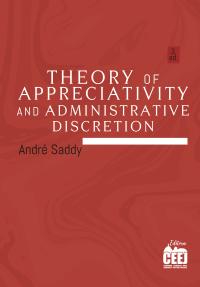
Theory of Appreciativity and Administrative Discretion
ISBN: 9786584958975
Por: Centro para Estudos Empírico-Jurídicos | Autor: Saddy, André | Edição: 3
The book presents the Theory of Appreciativity, developed during the author's doctoral studies at the Complutense University of Madrid and tested within the Graduate Program in Law (PPGD) at the Fluminense Federal University (UFF). Its main objective is to introduce, substantiate, and systematize appreciativity as a new global and autonomous category of administrative public subjectivity or autonomy. The author emphasizes that, although other scholars refer to similar concepts—such as potere di valutazione (non discrezionale), unauthorized discretion, or discretionary rights—none clearly distinguishes them or examines them in depth, a gap that the doctoral thesis sought to fill and that this work systematizes in a didactic manner. It offers a comprehensive analysis of the different forms through which administrative will is manifested (freedom of configuration, discretion, the margin of free appreciation of indeterminate legal concepts, and appreciativity). The methodology included a critical review of national and international scholarship on the manifestation of administrative will, with particular emphasis on discretion. The main outcome is the formulation of the Theory of Administrative Appreciativity, which conceptualizes it as a relative margin of freedom, autonomy, or volition projected onto facts and interpretative criteria. This freedom is omnipresent and residual, operating where other forms of subjectivity do not apply. It is characterized as being implicitly conferred, inherent to certain functions, and based on the individual judgment, discernment, and evaluative reasoning of the public agent when assessing factual situations and applying the law. The Theory of Appreciativity provides an essential framework for understanding the inescapable margin of freedom exercised by public agents, driven by the practical need to pursue the public interest in the face of legal indeterminacy and concrete realities.


